Personal Information Collection and Use Consent for Downloads (Required)
Woongjin Asia Sdn. Bhd. collects the following personal information from public institutions, companies, and individuals who wish to access our services through downloads.
-
1. Purpose
To provide access to downloadable resource materials related to our services2. Items Collected
Name, Email address, Phone number, Company/Organization, Job title3. Retention Period
Up to 5 years from the date of submission4. Right to Refuse Consent
You have the right to refuse this consent for personal information collection and use. However, please note that refusing consent will prevent you from accessing our downloadable resources.
Personal Information Collection and Use Consent for Marketing and Advertising Communications (Optional)
This consent allows Woongjin Asia Sdn. Bhd. to send you advertising and promotional information about our products, services, events, benefits, and newsletters through electronic channels (phone, text message, email, etc.).
-
1. Purpose
To send marketing communications related to Woongjin Asia Sdn. Bhd., including information about products, services, events, benefits, and newsletters2. Items Collected
Name, Email address, Phone number, Company/Organization, Job title3. Retention Period
Up to 5 years from the date of submission4. Right to Refuse Consent
You have the right to refuse this consent for personal information collection and use. However, please note that refusing consent means you will not receive promotional information about our products, services, events, and benefits.
개인정보의 취급 위탁에 대한 동의 (선택)
㈜웅진은 다운로드 및 문의하기를 통해 당사 서비스를 이용하고자 하는 공공기관, 기업, 개인 등을 대상으로
취급위탁을 위해 아래와 같이 개인 정보를 수집하고 있습니다.
- 개인정보의 취급위탁에 대한 동의
-
1. 수탁자 : SAP Cloud Security
2. 목적자 : 위탁자 ㈜웅진의 개인정보 보관 및 연동
개인정보의 국외 이전에 관한 동의 (선택)
㈜웅진은 다운로드 및 문의하기를 통해 당사 서비스를 이용하고자 하는 공공기관, 기업, 개인 등을 대상으로
정보의 국외 이전을 위해 아래와 같이 개인 정보를 수집하고 있습니다.
- 개인정보의 국외 이전에 대한 동의
-
1. 이전되는 개인정보 항목 : 이름, 이메일주소, 연락처, 회사명, 직급
2. 이전되는 국가 : Australia (Sydney)
3. 이전 일시 및 이전 방법 : 개인정보가 업무에 필요 시 네트워크를 통하여 전송
4. 이전받는 자 : SAP Cloud Security
5. 이전받는 자의 개인정보 이용목적 : 보관 및 연동
6. 이전받는 자의 개인정보 보유·이용기간 : 입력일로부터 2년까지
Blog
-
PEOPLE
Learning Fast, Contributing Early; Mirza Syahmi, Junior Software Engineer, CIT Team
2026.09.11
-
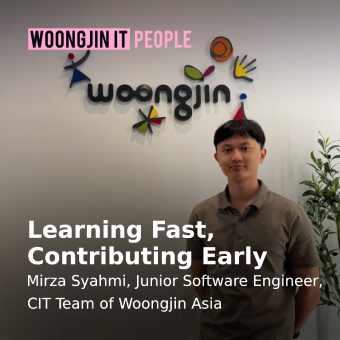
PEOPLE: Woongjin IT in Malaysia ― Mirza Syahmi | Woongjin Asia In June 2025, Woongjin selected Malaysia as a strategic hub for expanding its presence in Southeast Asia and established Woongjin Asia in Kuala Lumpur. Since then, the company has been actively working to strengthen its IT capabilities beyond Korea while building a stronger presence internationally.
Continuing our WOONGJIN PEOPLE series, we speak with Mirza Syahmi, a fresh graduate who joined Woongjin Asia's CIT Team just five months ago. From onboarding to being trusted with real development work on production systems, this is a story about learning fast, taking ownership early, and growing within a team that bridges Malaysia and Korea.
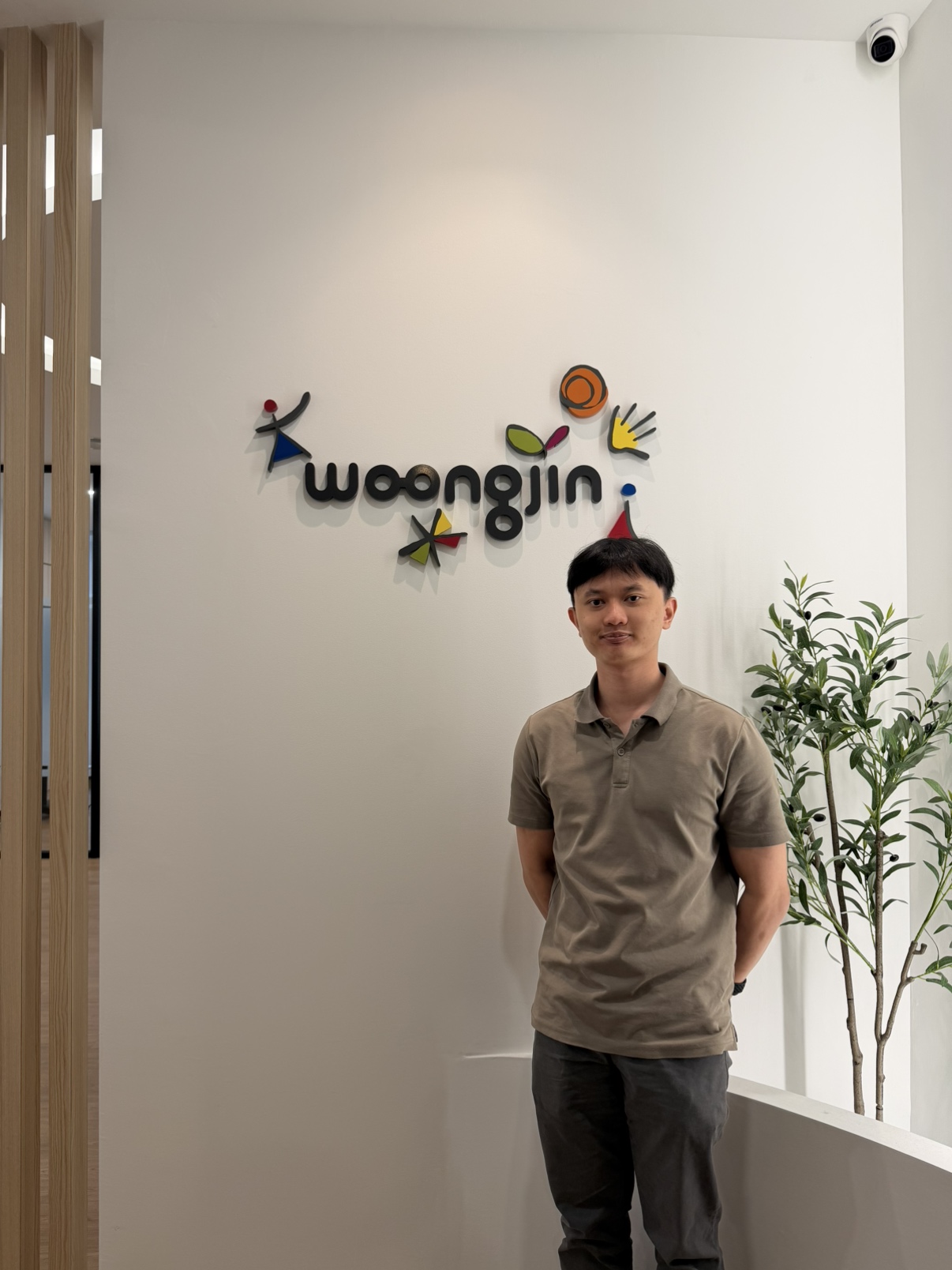 Kuala Lumpur, MYWoongjin People · 2026Mirza SyahmiJunior Software Engineer · CIT Team, Woongjin AsiaA fresh graduate who joined the CIT Team five months ago, quickly taking on real development work on production systems supporting Woongjin ThinkBig's education business.Part 1 What It Means to Work at WoongjinQ 01Please introduce yourself: your name, your role, and the team you belong to.
Hi, my name is Mirza Syahmi. I'm currently working as a Junior Software Engineer in the CIT Team at Woongjin Asia.
Q 02Could you share how you came to join Woongjin, and how you ended up being placed in the CIT Team?I first learned about Woongjin during my final year at university in Korea, when I had the opportunity to attend a company introduction session at Woongjin's headquarters. That was when I became more familiar with the company and later learned about Woongjin Asia in Malaysia.
When an opportunity became available, I decided to apply. The recruitment process had several stages. It started with application screening, followed by behavioural and coding assessments. The final stage was an interview that included both general questions about myself and technical questions, particularly related to Java and SQL.
Based on my technical background and the interview assessment, I was placed in the CIT Team, where those skills are closely related to the systems and development work we handle.
Q 03You joined in April, so it's now around 5 months in. What was your first impression of Woongjin, and how has your perspective changed since then?One of my first impressions was that Woongjin was serious about expanding its IT capabilities beyond Korea and building a stronger presence internationally.
That was particularly interesting to me because Woongjin Asia itself is still relatively new. As a fresh graduate, it meant that I was joining at a stage where there was a lot for us to learn, but also a lot of room to grow and contribute.
Five months later, I think that impression has become stronger. We work closely with experienced developers from Korea, but at the same time the team here in Malaysia is gradually building its own technical capabilities. Being able to learn from an established team while helping build something locally has been one of the more interesting parts of the experience.
Being able to learn from an established team while helping build something locally has been one of the more interesting parts of the experience.
Q 04Once you were placed in the CIT Team, how did the onboarding process go?The onboarding was quite hands-on. During the first few weeks, our team leader spent time walking us through the systems, development environment and the types of work handled by the CIT Team. Instead of only learning through documentation, we were also given practical assignments, which helped me understand how the system actually works.
We also had knowledge-sharing sessions with senior developers from the CIT Team in Korea. They explained the existing systems, development processes and some of the business logic behind them.
What I appreciated was that we could ask very specific questions during those sessions. When you are working with a large system that has been developed over many years, understanding why certain logic exists is often just as important as understanding the code itself.
Q 05What kinds of tasks or responsibilities have you been handling as a junior member of the CIT Team?My work has mainly involved full-stack development and system maintenance. One of my main responsibilities has been developing new functions based on business requirements. For example, I recently worked on integrating the registration process for a newly introduced educational product into an existing customer registration system.
That involved more than just adding a new screen. I had to work with the existing business logic, backend services, APIs and database tables while making sure the new functionality did not affect existing products. I have also developed management screens that allow internal users to view and manage customer-related information.
Throughout the development process, there is quite a lot of communication with senior developers and business users. We need to confirm that our interpretation of the requirement is correct before development, and then test the different scenarios after implementation.
In addition to development work, I handle HELP tickets, which can involve carrying out controlled data corrections when necessary. Apart from the internal systems, I have also worked on the Woongjin Asia website, including development and maintenance work to make sure the website continues to support the company's business activities.
Q 06Based on your experience so far, how would you describe Woongjin's working environment and team culture within CIT?From my experience so far, I would describe the working environment as supportive, but also one where junior developers are given real responsibility.
Even as a fresh graduate, I have been assigned actual development tasks that are eventually used in real systems. There is guidance and code review from senior developers, but at the same time, we are encouraged to investigate problems ourselves and understand the logic behind what we are working on.
Within the CIT Team, communication is quite open. If someone encounters a problem, we usually discuss it together rather than leaving that person to struggle with it alone. There is also a strong habit of sharing knowledge.
Real ResponsibilityJunior developers are assigned actual development tasks used in real production systems, guided but not micromanaged.Open CommunicationProblems are discussed together as a team, and knowledge gained by one person is actively shared with everyone else.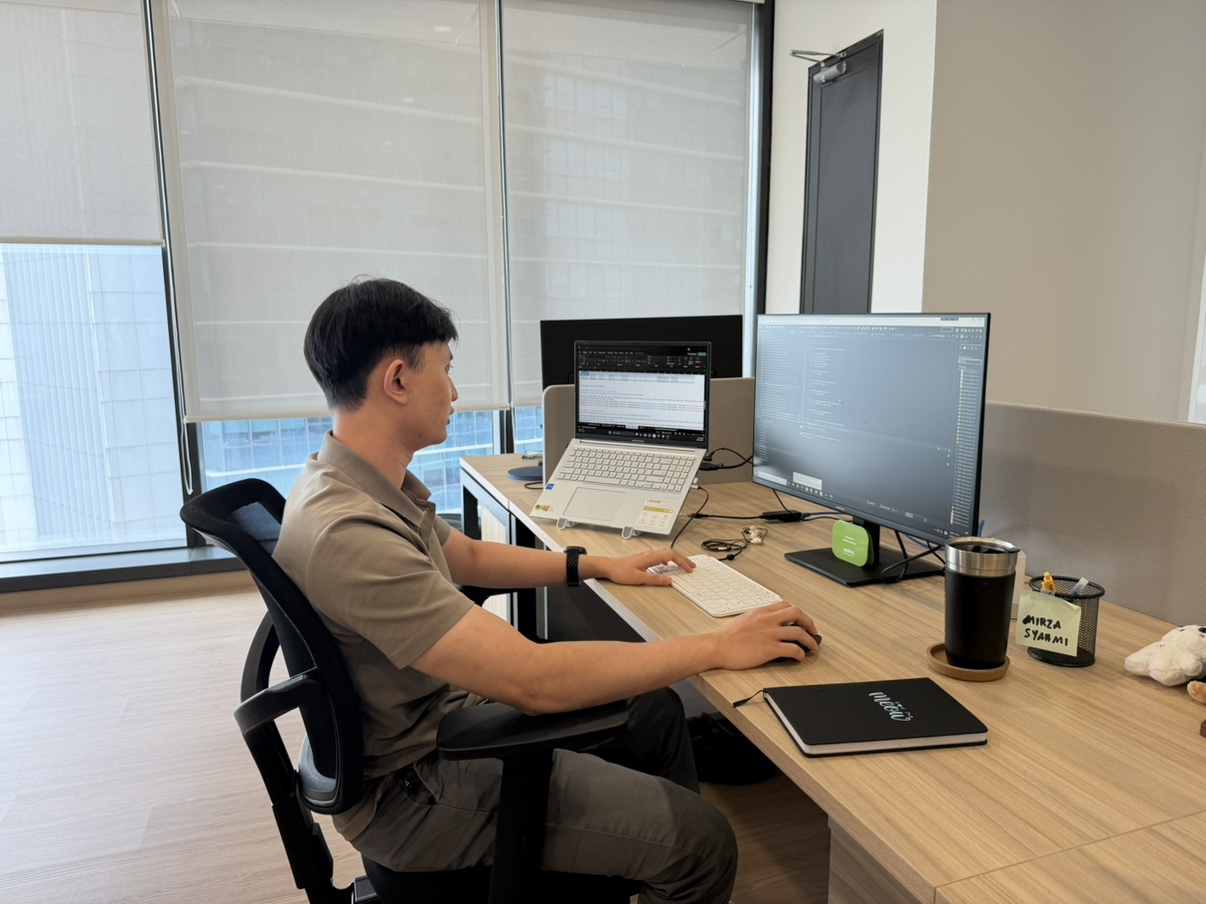 Photo 1 Mirza Syahmi at his workstation at the Woongjin Asia office in Kuala Lumpur, focused on development work.Part 2 Woongjin Asia TodayQ 07Could you briefly introduce the CIT Team: what is its role within Woongjin Asia?
The CIT Team mainly focuses on software development, system maintenance and IT support for systems used within the Woongjin Group.
At the moment, we work closely with development teams in Korea and contribute to systems that support different business operations. In my case, most of my current work is related to systems used by Woongjin ThinkBig's education business.
Our work can include developing new features, maintaining existing functions, investigating issues and making sure that system changes are properly tested before they are released. The team also plays a role in strengthening development capability in Malaysia.
Full-StackDevelopment scope across CIT Team2Countries collaborating: Korea & MalaysiaThinkBigCore education business supportedQ 08How does the CIT Team's work relate to or support WRMS operations or other systems?WRMS is one of Woongjin's business solutions, particularly in the rental-management area, but the scope of IT development within Woongjin is much broader than WRMS alone.
My current responsibilities are mainly related to systems supporting Woongjin ThinkBig rather than WRMS directly. These systems support different parts of the education business, including customer registration, product orders, teacher assignment, learning-related processes and customer management.
Although the business domains are different, the type of work is quite similar in many ways. A big part of the work is also understanding how different parts of a system are connected. A change that looks small on the screen can sometimes affect database records, order processing, customer information or another service that depends on the same data.
Development is not only about making a new function work. We also need to understand how the change fits into the wider system and make sure that existing processes continue to work correctly.
Q 09Is there a task or project from your first 5 months that you found particularly meaningful or challenging?One of the most challenging projects for me has been the KRS project, which I have been working on for roughly the past two months. My responsibility was mainly related to integrating the KRS registration process into an existing production system.
What made it challenging was that we were not building a completely separate application. The system already supports many products and business rules, so whenever we introduced new logic, we also had to make sure that existing registration flows continued to work correctly.
The work also involved APIs, database tables and existing backend services. Because of that, I had to understand how information moved through different parts of the system instead of only focusing on one piece of code.
It was challenging, but it has also been one of the most meaningful projects for me because it gave me much more experience in developing new functionality within a large, existing system.
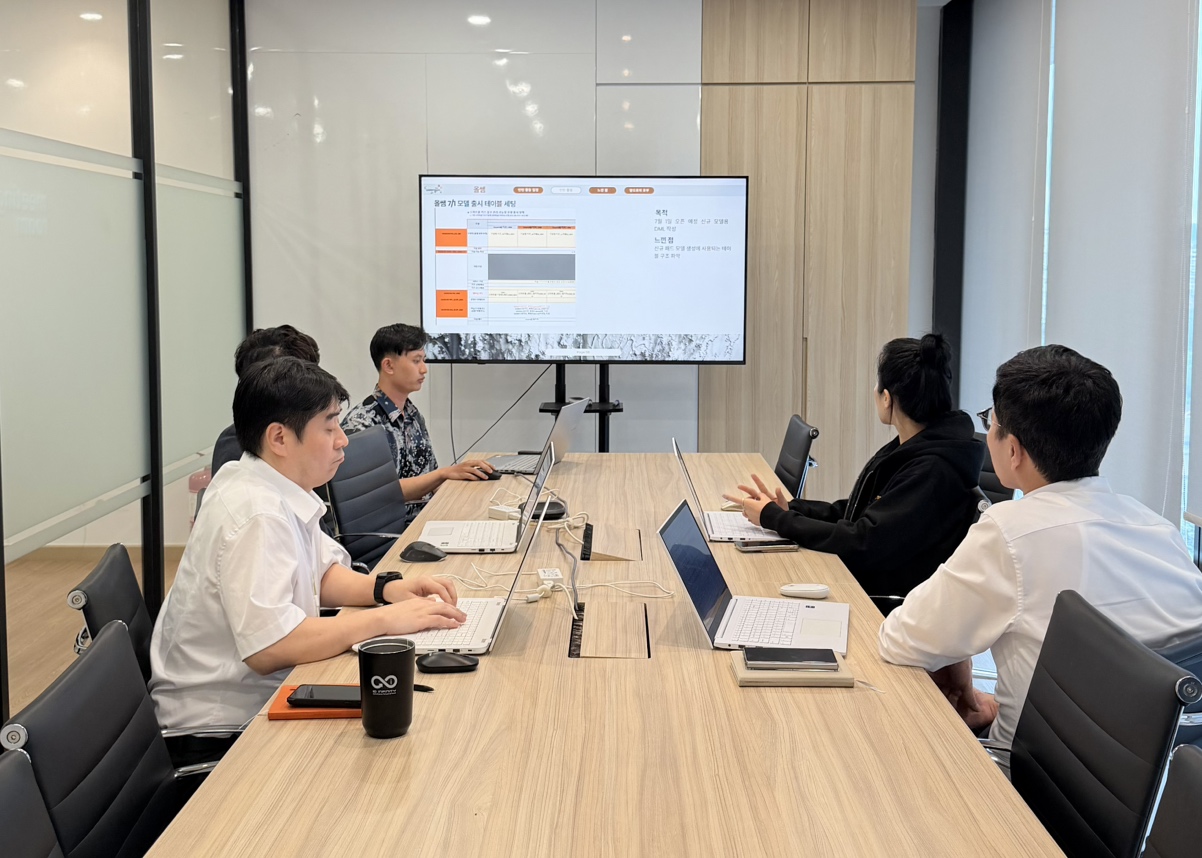 Photo 2 Mirza Syahmi presenting findings and lessons learned to management at the Woongjin Asia office, reflecting the close collaboration between Malaysia and Korea teams.Q 10What is something new you've learned since becoming part of the CIT Team?
One of the biggest things I have learned is that software development is not only about writing code. Communication between developers and business users is extremely important. A feature can work perfectly from a technical perspective but still be wrong if the developer has misunderstood the business requirement.
On the technical side, I have also had the opportunity to work with API development and integration, database design, existing Java services and different edge cases that may not be obvious from the initial requirement.
Working with an existing enterprise system has also taught me to think more about the impact of a change. Instead of only asking whether my own function works, I now try to consider what other parts of the system could be affected by it.
Q 11What are your hopes or goals for your continued growth within the CIT Team and Woongjin Asia moving forward?My immediate goal is to become an engineer that the team can rely on. Right now, I am still learning a lot about the systems and the business logic behind them, so I want to build enough experience to handle more complex tasks independently and understand the wider impact of the changes I make.
In the longer term, I would like to grow beyond simply implementing requirements. I want to be able to contribute more to system design, technical discussions and decisions about how a feature should be developed.
Eventually, I would also like to become someone who can guide newer developers, just as the senior developers have been helping me since I joined.
I would like to become someone who can guide newer developers, just as the senior developers have been helping me since I joined.
Photo 3 Mirza Syahmi at the Woongjin Asia office in Kuala Lumpur, five months into his journey with the CIT Team.Part 3 A Little More About YouQ 12Outside of work, what do you enjoy doing in your free time?Outside work, I spend quite a lot of my time at the gym. Strength training has been one of my regular hobbies for a while, so I normally go after work a few times a week.
More recently, I have also started bouldering. I enjoy it because there is actually quite a bit of problem-solving involved. You have to look at a route, figure out how to position your body and then try different approaches until something works. It is also a nice change from sitting in front of a computer for most of the day.
Q 13What has been the most memorable or fun moment for you at Woongjin Asia so far?One of the most memorable moments for me was our Hari Raya celebration at the office. We had colleagues from Korea joining us during the celebration, so it became a nice opportunity to introduce some Malaysian traditions and local dishes to them. It was fun seeing everyone try the food and learn a little more about the culture.
Most of our usual interactions naturally revolve around work, projects and deadlines, so having an event like that gave us a chance to talk more casually and get to know each other outside of our usual roles.
Q 14If you could describe your first 5 months at Woongjin in just one word or phrase, what would it be?I would say "opportunity." As a fresh graduate, I initially expected that my first few months would involve a lot of observing and learning before I was given much responsibility.
Instead, I was given opportunities quite early on to work on real development tasks and eventually contribute to features used in actual business systems. There was definitely a learning curve, especially when working with systems and business logic that were completely new to me. At the same time, being given that responsibility pushed me to learn much faster.
The first five months have really been about having the opportunity to learn through actual work.
Q 15What advice would you give to someone about to join the CIT Team as a new junior member?I would tell them not to be afraid to ask questions, but also to try investigating the problem themselves first.
When you first look at some of these systems, the amount of existing code and business logic can feel overwhelming. You are not going to understand everything immediately, and that is completely normal for someone who is new to the team.
Try to understand why the system works the way it does, ask when something is unclear and do not be too afraid of making mistakes while you are learning. At the same time, take responsibility for what you develop. Test your changes properly and think about how they might affect other parts of the system.
Eventually, the things that seemed complicated at the beginning start to become familiar. And once you have gained that experience, hopefully you can pass it on and help the next junior developer who joins the team.
Woongjin Asia's Perspective EditorialA · FactualMirza Syahmi joined Woongjin Asia's CIT Team in April 2026 as a fresh graduate. Within five months, he has taken on full-stack development responsibilities on production systems supporting Woongjin ThinkBig's education business, including the integration of the KRS registration process into an existing customer registration system.B · HumanWhat stands out in Mirza's story is how quickly trust translates into growth. Given real responsibility from early on, he leaned into asking questions, testing thoroughly, and understanding the "why" behind existing systems. These are the same habits senior developers modeled for him from day one.C · StrategicAs Woongjin Asia continues to build local development capability, junior engineers like Mirza represent the next generation of talent bridging Korea's established systems expertise with Malaysia's growing technical team, which is a critical part of the company's long-term regional strategy.Woongjin Asia's CIT Team continues to grow its local development capability while working closely with experienced teams in Korea.
Stories like Mirza's reflect the company's approach to nurturing junior talent by providing real responsibility early, supported by mentorship and a strong culture of knowledge-sharing.
We look forward to sharing more stories from the people building Woongjin Asia's future, one system and one team member at a time.